Daughter of Shadow Launch Party

IMG_4674

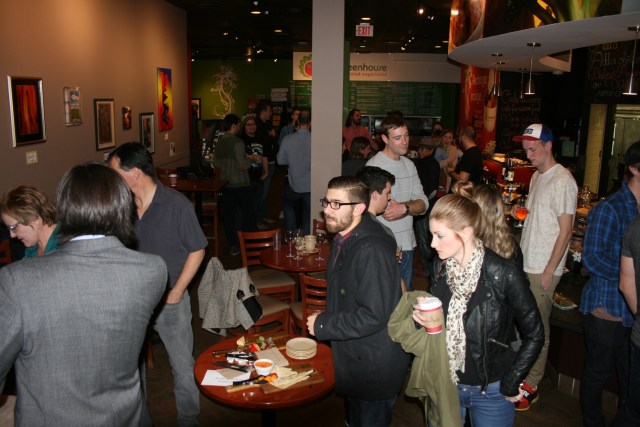
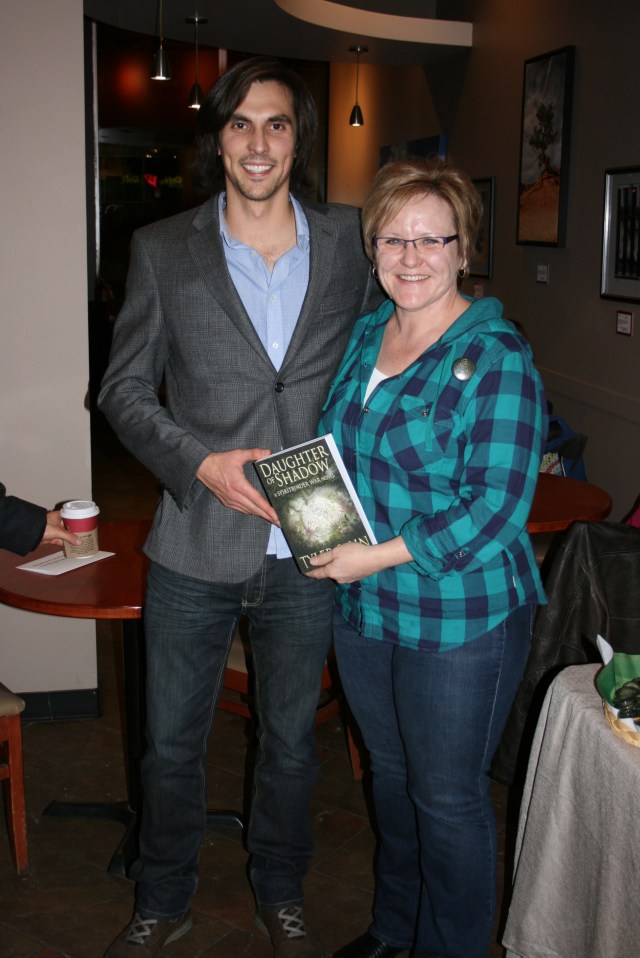
The book launch party for Daughter of Shadow was this past weekend and the support was amazing. The ebook has been available for a few weeks now but it was distinctly more satisfying (as a writer) to hold the book in my own hands. After countless hours staring into a computer screen while writing, dozens of edits, and a few bouts with formatting I finally had a finished product. A very surreal moment.

IMG_4690

The cover art turned out great; I’ve been quite impressed with Createspace. The entire order for the party sold out, which is a good problem to have. Signing copies was fun, a novelty that I doubt will get old anytime soon.

IMG_4683

I created a story but a story isn’t much without someone to share it with. Many thanks to everyone who attended the event and to all those who were unable to attend but still made the effort to contact me.

IMG_4691

The Trap of “Good Enough”

self-publishing_o_900037

All of us dreamers with a wifi connection, an idea, and enough time to type out a few words can be now authors. This predicament is personally inspiring and collectively terrifying. A person can make their voice heard, get their story out into the public, but how many of those voices are incoherent babbling?

There is an invisible rope snare laying in wait for the would-be self-published author, many wander into it unawares and then dangle until giving up. One musters up the courage to write the story and publish it only to have it flounder. But why? Why do the vast majority of self-published authors never earn a cent from their writing?

An obvious answer is that the market is flooded by wannabes telling semi-realized stories riddled with grammatical errors and inefficient (or non-existent) marketing. But every author was a wannabe at some point, those who have “made it” did not wake up one morning with a fresh bestseller under their pillow (Nicholas Sparks might be an exception).

To be a professional in anything isn’t easy; dogged persistence is ineffectual if the skills are lacking and talent can seep away if effort isn’t applied. Professional writers work hard on their stories, endeavoring to create something that rings true, a clear note within the cacophony. My trek towards professionalism is still in progress but I can offer some personal insight from my experience of writing a novel with regards to the trap of “good enough.”

  1. Inexperience—It’s difficult to write an amazing story when one hasn’t spent much time writing. So write! Jot down ideas. Take notes. Try out short stories, poems, essays, novels, blogs, diary entries, etc until the act of not writing feels unnatural. A professional athlete makes it to the big leagues by spending hours upon hours honing their skills so why would becoming a professional writer be any different? Read from different genres and different styles, look for what makes different authors unique. All of this effort aids in creating your own style—no one will believe the words you put down if you don’t believe in them first.
  2. Discipline—Habits. We all fall into patterns that are eventually perceived as the way things are, blinding us to the fact that they are changeable. You, I, the next person you see, are all mostly water—we flow along the path of least resistance at every opportunity. Unfortunately, most times the easy route does not end in a book deal. Habits are stubborn little critters and often need to be actively altered. When you’re absently clicking through the internet and feel the jolt of an idea or the pang of “I should be writing” then start scribbling/clicking away. When you feel like there’s no time to write then make time. Nobody can lie to you better than you can, but luckily you know your own tricks (or can learn them).
  3. Fear of Rejection—Writing is personal and it can be scary to share with others, but sharing is a crucial threshold that needs to be crossed. Find a supportive network that is open to discussing ideas and if you trust the opinion of individuals within this network then share your writing with them. As a writer you need to discover what aspects of your story/style is working and what can be improved. This detail is key: you are not your art. Learn how to accept criticism. The critique is of your art, a creation separate from you as a person, something that can be altered and shaped in any number of ways.
  4. Overexcitement—The desire to “get it out there.” Rushing the process in pursuit of the dream, which results in a story not being ready to hang with the heavyweights. Don’t skip steps because publishing is only a few clicks away. Do your homework, make a plan, put in the extra behind the scenes effort
  5. Hire a Professional—Sometimes an opinion other than that of your unfalteringly supportive best friend is required. Hire a professional when you’re ready to make the jump from amateur to professional (you might not succeed but the odds are tilted more in your favor). Editors are book magicians, it is literally their job to make your story as good as possible. People do judge books by the cover so get an artist. Be thorough, check around, ask plenty of questions before choosing which professional to go with.
  6. Relax—Writing is fun! You love to write. You’re in charge. This project is yours, do what you want with it. When you’re ready, let it go. Art isn’t meant to be perfect or timeless, trying to attain subjective ideals like this can drive a person insane. Be awesome (way more fun than perfect).
  7. Ask Yourself Tough Questions—Everything I’ve described is meaningless without this step. The most important part of DIY is the yourself. Why are you writing? What are you writing? What are you goals? What is your view of success? Is your story realistically comparable to similar titles in the genre? How can it be made better? How do you respond to criticism? Be objective about your story whenever possible (remember, it’s not you, it’s of you). If you’re going to DIY then you better make sure that the project turns out the way you want. I’ve found that satisfaction in this regard is directly associated with excuses. Less excuses=more satisfaction.

There are entire books written on this topic and various self-described gurus out there who claim to be able to guide an author to success. This blog is by no means a replacement for those resources. I understand there is no clear path to becoming a professional writer but I think the seven above mentioned items have validity. My list is not exhaustive or overly detailed (attention spans: yours and mine). I can go into more detail if anyone is interested and would love to hear any tips other writers have to share.

Why Fantasy?

f3b75e48d1f35612dbc6aede6c421e68

At first glance fantasy seems like a ridiculous genre to read, let alone write, yet it has never been more popular than right now. Big books, modern day tomes, filled with swords, mythical beasts, magic, and outrageous adventures have became mainstream. People eat it up—old rehashed stories and modern innovations alike. Why?

I think this phenomenon stems from the ability of a fantasy novel to transport the reader into an exciting, foreign world controlled by the same, but accentuated, rules that govern the world we inhabit. At some point in our lives we all have epic fantasies and such fantasies appear as commonplace in a fantasy novel. The desire to become better than we are through diligent training, to rise to (and overcome) all challenges, to selflessly make the personal sacrifice when required, to shape the world with our own unique power. To be a hero.

I’m referring to an archetypal hero. The champion, the ultimate victor, an individual saturated with glory. In the stories these heroes come to believe, trust—no it’s even more than that—they know, deep down in their bones, where the spirit may or may not reside, that there is something other than themselves. That this something needs their aid. All well and good for an ancient musclebound Greek blessed by the gods, but what about the rest of us?

In many fantasy stories this schism of good and bad is clearly developed—light vs. dark, life vs. destruction, order vs. chaos, love vs. hate. This dichotomy works well within the confines of book covers but has difficulty spilling over into the day-to-day reality of our lives.

People are complicated, we’re bundles of contradictions. Rarely does a wise wizard appear to tell one that he/she is The Chosen One, and if you happen to find yourself in this situation DO NOT GIVE OUT YOUR CREDIT CARD INFO, because that elderly bearded gent is likely playing you for a sucker. And yet, wouldn’t it be easier with this magical system? To run off on a quest and triumph over the baddies—but in our world who are the baddies? We’re all just humans after all.

I’ve yet to encounter a rabid horde of trolls (late night scurrying to pizza shops after the bars close notwithstanding) and I’ve never faced the wrath of a Dark Lord hellbent on subjugation (personal debt is much subtler). So, if you were Señor or Señorita Chosen One, who would you do battle with, conquer, slay? What quest is worth the ultimate dedication?

Your answer is yours and yours alone, a completely subjective decision influenced by your own beliefs, age, societal affiliations, and motivations. Not right, not wrong, just yours. This is why I believe fantasy is a useful tool, because it allows for self-reflection by plunging the reader into a mirror-image of our world populated by characters battling with universal dilemmas. The large scope of fantasy is an attempted portrayal of an all-inclusive (not the kind with tropical drinks) struggle faced by individuals. One problem at a time. Page by page. The basic is expanded in order to be accessible, which is then interpreted through subjective experience. On some level the reader questions, “what would I do?” and this leads to the more important question of, “what do I believe?”

In a world without trolls and dragons (all we have are camera shy Sasquatch) where does one make a stand? What cause does one champion? There is no black and white answer, only a muddied grey full of choices. Choices that you must make for yourself.

Some people choose to make as few choices as possible and that’s fine I suppose, a kind of net-zero, not influencing positively or negatively, but I think that readers of fantasy are different. They’re dreamers. Hope filled idealists. Passionate explorers. Seekers of a quest. Not to burst any bubbles, but you’re already on a quest whether you realize it or not. A choose your own adventure where you can’t keep your finger on the page and read ahead to see if you like the outcome. No going back, no wizards or talking animals (besides a few species of canny birds). Only people.

We’re all we have. And as individuals, families, cultures, and societies we’re stranger, better, worse, more beautiful, uglier, weaker, and more powerful than anything imagined in fantasies.

Stories have the capacity to deeply affect us and from an early age I connected with the themes in fantasy stories. But that’s my subjective experience. Read a fantasy novel, put yourself into the story, allow the story to sink into you, and decide for yourself.

Dreams into Goals

boxing-ring-149840__180

What is your greatest dream?

We’ve all heard the question: What do you want to be when you grow up?  A teacherA firemanA dinosaur wrangler!  A writer!

I’ve written a novel.  Please hold your applause, people write novels all the time.  Withhold judgement until you’ve actually read the story, scanned a review, or  at least looked at the cover art.  But I will gladly accept a Like or a repost on social media (what an age we live in!).

I think the heart of this question is driving at something more fundamental than a set of career options (this isn’t the Game of Life where a flimsy plastic spinner directs a trip down a rainbow road).  I think the real question is, what do you want?  Not a chocolate bar when you’re a little hangry, not a booze fueled escapade at the Playboy mansion or 1000 likes on your newest selfie, but something more.  What is your dream?

Dreams might be the most under appreciated and overlooked aspect of humanity.  We all have them and yet rarely are they understood, instead we allow our dreams to evaporate in the bustle of daily life, or sink into the murky depths of the subconscious.  And yet dreams return nightly, persistent apparitions that they are, arising when we cannot look away.  Most dreams (mine anyway) are a series of incoherent images and events, but some are different, some linger, their power of influence stronger than the rest.  I think we encounter these types of dreams when we strike upon something that we truly want but have yet to fully acknowledge—the border between awake and sleep becomes blurred, allowing the tangible and the impossible to brush shoulders.

This encounter, however brief or reoccurring, elicits a combination of excitement and fear.  These emotions slug it out like WWE wrestlers, leaving you to play the role of referee—involved but useless until a final verdict is needed.  Excitement is fan favorite, arriving with fireworks and music but then Fear runs out with a steel chair and uses it when Excitement isn’t looking.  Wham!

Do you, as the referee, give the 3-count for the victory, reschedule the fight or give Excitement a chance to get back up?  Because we all know who the crowd wants to win.  You may think there is no cheering section in your corner but there is; the world is a big place.  Not everyone is born with supporters, and even if you are so lucky, sometimes a little wandering is required to find one’s own personal cheering section.

Now, back to the inner struggle: Fear doesn’t really care about victory, all it wants to do is keep knocking down its opposite over and over again.  If it wins then the game is over.  Much better to let Excitement wriggle free only to hammer it down once more with, “Not good enough/Your idea is stupid/Nobody cares/etc.”  On its own, Excitement lacks the oomph to finish the fight but it does have a trick up its sleeve.

When powered by a dream, Excitement pushes back forcefully, fueled by passion, and this is when things really get going.  Passion is focused, it provides direction, is unwavering and unstoppable.  Passion knows what it wants and will fight to get it. This is a major turning point: the dream has become a goal.

A dream is powerful but abstract.  A plan can be made to reach a goal.  There are distinct steps, thresholds, levels, and points of reference to indicate progress.  This is what I discovered when I stopped wishing for my dream to magically appear in front of me, when I actively chose to use my time and energy to transform the dream into a goal.

To be a professional writer has been my dream for a long time and from the moment I began Daughter of Shadow it transitioned into my goal.  The dangling carrot on the end of the stick that I’ve been chasing.  Well, now I’ve caught that damn carrot and I’m ready to take a chomp.

Publication is not the ultimate goal but it is a definite accomplishment.  One more step in the direction I want to travel, closing the separating distance to my dream/goal so I can see its form a little more clearly.

If you’ve found your dream I encourage you to persevere until you attain it.  If you are waffling in the grey I encourage you to listen to your intuition, to not simply disregard a dream as a mirage.  If you are wandering then I encourage you to continue to explore.

I’m going to close with a poem that encapsulates my journey with this novel.  Poems are a lot like personal dreams—they are loaded with intrinsic value and might resonate with others.  Enjoy!

I use the blank page to translate rumblings of spirit

I use the blank page to wipe up leaking brain chemicals

I use the blank page to unite past, present, and future

I use the blank page to embark into the unknown and mark down what I find

I use the blank page to breathe in who I was and exhale who I might be

because with the blank page, I am