In Stores Now!

images-1

Daughter of Shadow is now available in stores. Two stores to be exact. Two small stores in Camrose, Alberta, Canada. But hey, that’s two more than last week. Have to start somewhere.

Since I was a kid I’ve dreamed about having a novel of mine on a shelf beside the best writers in the genre. Actually accomplishing this endeavour is quite surreal, being both harder and easier than I expected. I have to admit that I did feel a sense of satisfaction as the proprietor’s praised the cover art and flipped through the pages before deeming the product to be acceptable.  Daughter of Shadow, and me by association, have made the “big leagues.”

imgres

(Thanks Leo)

Readability

so-good

In the world of novels readability is king (or queen if you prefer matrilineal monarchy).

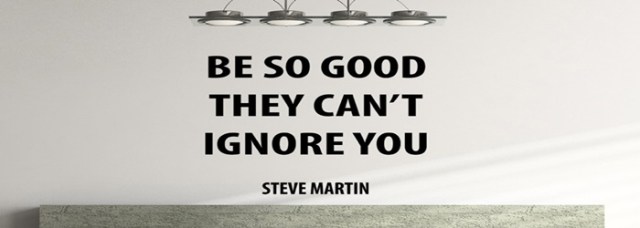
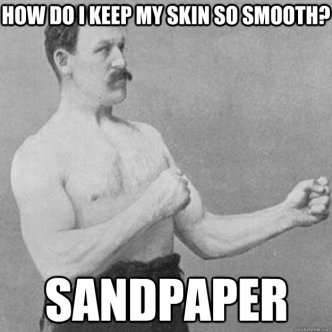
How to make a story smooth as 30 year old scotch? In my experience the secret ingredient is editing. Going back to the same words time and time again until they and the story are of the same shape.  Make the readability undeniable. So. Damn. Readable.

I’ve come to enjoy the editing process, finding satisfaction in improving my writing skills while smoothing out the story. A long way since my student days when I detested editing. Who wants to re-read something they didn’t want to write in the first place? Formatting a manuscript for e-book and print is now my most despised writing task. But part of being a self-published author requires that one (initially) become a one man band. Self-motivation is an elusive but powerful tool.

a424x600

Daughter of Shadow underwent another (and final) edit in preparation for the Self-Published Fantasy Blog-Off orchestrated by Mark Lawrence. I knew the story could use another edit to take it to the next level and the potential publicity afforded by the contest necessitated that I submit a quality entry. No excuses. On the readability scale of “What Language is This?” to “Can’t Put it Down” I’m hopeful that Daughter of Shadow is now closer to “Smooth as Fuck.”

a944ac631c984f176b220bfeed705cbc06393d65cf85f2032ae6a4b1b297a2dc

After the December 2015 release of Daughter of Shadow I entered the book in an open submission headed by Gollancz, just to see what they said. Several months later a rejection letter arrived stating, “The ideas seem solid but the prose needs work.”  This my friends, is motivation.

I’m a basketball player—I want to make every shot I put up—the Gollancz submission was a missed shot. But a shot worth taking. I wasn’t about to hold back the next shot because to stop shooting means the game is lost, or soon will be. So I went to the gym/manuscript, spending time and effort to make my shooting form/prose as efficient as possible so that the shot/story has a chance next time I let it fly.  It’s airborne.

Daughter of Shadow on Amazon

Radio Interview

imgres

By way of a serendipitous encounter I will be speaking with Gail Vaz-Oxlade on her podcast which airs on NewsTalk 1010.

Gail has written 13 books on personal finance, numerous financial articles, and hosts the television shows Princess and Til Debt Do Us Part.  She recently finished a lengthy Canadian promotional tour for her new book, Debt-Free Forever. Suffice to say, she is a powerful personality and I look forward to the interview.

I will be discussing my novel, Daughter of Shadow, as well as the self-publishing process and writing in general. The interview takes place Monday February 15 @ 11:10PM EST.

NEWSTALK1010 LINK


Award Nomination

A new year has arrived and with it an early attempt at a little self-promotion! Daughter of Shadow has been nominated for Best of /r/Fantasy 2015 – The Stabby Awards. The competition aims to honor fantasy novels and while Daughter of Shadow  was a latecomer (released in early December), two readers found the time to nominate it in the categories Best Debut as well as Self-Published/Independent. 

I don’t expect Daughter of Shadow to win, seeing as it simply hasn’t reached a wide enough audience yet, but to be nominated is pretty cool. Have to start somewhere.

Follow the link to view all of the categories and vote for your favorites, or to scroll through a great list of recent fantasy novels.

Link: The Stabby Awards

The voting thread closes on Wednesday, January 6, 2016 at 10pm PST. The results thread goes live Saturday, January 9, 2016 by 10pm PST.

Marketing: So You’ve Written a Novel

Unknown

Marketing: the action or business of promoting and selling products or services, including market research and advertising.

How does one use marketing to sell books? Theories and tools abound but none can legitimately lay claim to a surefire technique. The rapid ascension of self-publishing has thrown a kink into time tested models and everyone in the publishing industry is scrambling to adapt.

When listening to speakers at a writing/editing/publishing conference I attended there seemed to be a unanimous approach to modern marketing from independent, small, medium, and large publishers—the shotgun method. Splatter the wall and see what hits. Not the most efficient or eloquent of approaches but no one seems to be able to say for certain what will, and won’t, work.

The phrase, “Write the best story possible and the cream will rise to the top,” kept appearing at the conference as well. How then to explain massive successes like 50 Shades of Grey? Clever marketing obviously had a hand in making that poor-to-mediocre story a success. I think it all comes down to word of mouth. The more people talking about a product, or at least are aware of it, then the higher chances of potential sales.

The shotgun method is an attempt to connect with various streams in the hopes that one, or multiple, will raise awareness of the book and author. Sounds easy enough but when everyone is doing it then the “cream” has a lot more crap to rise through to get to the top.

The amount of available funds at a publishers disposal also plays a major role in marketing. Rarely can a self-published author match the concerted and widespread marketing effort of a Big 5 publisher. Not all shotgun blasts are created equal. Not everyone gets to reload.

But what about social media? It’s free and ubiquitous! There are many success stories of self-published authors using social media to raise awareness and even the big time authors with big time contracts have to be involved on social media. Yet I can’t help but get philosophical about the apparent advantages of social media—if a self-published author blogs does anyone hear it? Do all tweets come from songbirds or is it just a bunch of honking geese?

Whatever the case, I’m trying my own shotgun method with my novel, Daughter of Shadow. I have to admit that aspects of marketing are fun—it’s like jumping into a game that’s already in process and nobody fully understands the rules. The most frustrating part is the not knowing. What works? What doesn’t? Why?

It’s incredibly easy easy to drop a piece of yourself into the internet but most of the time that piece sinks away never to be seen or heard from again. Maybe message in a bottle method is more appropriate than shotgun, although the reference to a weapon conveys a sense of control and applied direction rather than casting out wishes and hoping for the best.

To close on a point of optimism—we’re all in this together. The big time authors and first time self-pubs are all caught up in the same game. I can read Rothfuss, King, Gladwell, and Le Guin all at the same time and everyone wins, because the beauty of writing is that it’s meant to be shared. Books are a very different product then say a blender; you can never have too many.

Tough Women

The damsel in distress days are over. Women are more than capable of solving (and creating) their own problems. A female character no longer has to wait for rescue from prince charming, she can save herself and kick the bad guy’s ass in the process.

Gender equality, while not perfect, seems to have reached a level of acceptance where strong and flawed feminine characters are being recognized in popular culture. People want to view and read about these characters because they are relatable. Aspects of these heroines exist in reality, their attributes plucked from the personal and collective milieu. The bones of fantasy and sci-fi elements mirror those from our day to day lives and many of our lives are filled with complex, independent women.

When I began writing Daughter of Shadow there was no doubt in my mind that the story revolved around a strong female character.  Her name is Melea and she bucks the classic tropes of a fantasy protagonist. I don’t want to give too much away but when the story begins she’s certainly not a hero and would kill anyone who labeled her as villain.

A recent reader review of Daughter of Shadow described Melea as a “tragic, Don Draper character.” This comparison blew my mind—the manliest guy on a show where the word men is even in the title (Mad Men) was legitimately compared to a young female character in a fantasy novel. There are similarities: an outwardly successful individual with a carefully managed persona who is constantly being disrupted by a haunted past. In Mad Men, Draper drinks and humps his way through the 1960’s as his way of coping with this internal conflict, a cliche usually reserved for men. This is not always the case as the motif is flipped in the new Netflix series, Jessica Jones.

Jones is a foul mouthed, hard drinking, fiercely independent woman working as a private investigator. A childhood accident made her the recipient of superpowers and she’s caught in the struggle of what to do with this unwanted power. The first season is fantastic and Jones is one of the most interesting new characters I’ve come across.

Then there’s Star Wars: The Force Awakens, the most hyped movie of all time. The saga finds Rey, an intelligent, persistent, caring, resilient woman whose role in the Star Wars universe increases exponentially from her humble beginnings (No spoilers I promise). It’s no accident that Star Wars & Disney teamed up to place a strong female character at the forefront of the biggest movie series in history (Harry Potter and James Bond are in the conversation).

In Paolo Bacigalupi’s, The WIndup Girl, the near future is given a harsh, realistic, breathtaking portrayal and Emiko, a New Person, is the ultimate survivor in a world of hustlers. Emiko is not human, not in the eyes of those around her, so she must overcome the kinds of abuse usually reserved for females as well as what it means to be human. Bacigalupi crafts the story expertly and Emiko’s transformation is a powerful statement about some of the obstacles faced by women in a rapidly changing world.

The Worldbreaker Saga by Kameron Hurley has entire continents of strong women—some nice, some not so nice. The first installment, The Mirror Empire, struck me as a truly modern fantasy novel. The way she bent and broke all the cliches of classic fantasy with seeming ease to create matriarchal societies is a thing of beauty.

I’ve watched an interview with George R. R. Martin where he is asked about his “complex and well-rounded female characters.” Martin chuckles and smirks, looking like he’s about to give a retort that Tyrion would use but then calmly conveys his bewilderment at having to constantly express that women are people. Why shouldn’t they be complex and well-rounded?

Women are tough.  It’s not that woman are changing to fit the definition but the other way around.

Ikigai

AfguRdR

This little beauty is called an Ikigai, a Japanese concept meaning “a reason for being (Wikipedia).” Japanese culture has produced some of my favorite things (sushi, anime, ninjas, samurai, robots) and now the Ikigai is added to the list. The diagram is intended to serve as a reminder of the “reason to get up in the morning” and I think the simplicity and intricacy is fantastic. When you think about it, what else is there? Finding Ikigai is a lifelong search as one develops and matures through various experiences.

In most stories the main character searches for their Ikigai and the writer leads them to it. The search, the path, the conflict, resolution, and growth are laid out by the (mostly) all-knowing author. Perhaps our lives are the same, perhaps not—one has to delve into the topics of faith, destiny, God, and nobody is exiting that existential gauntlet with a clear answer. Storytellers get to create Ikigai and in doing so may stumble into their own.

I know I’ve never felt more in the center of said diagram than when writing. Not all the time to be sure, but enough to instantly jump to that conclusion when I first saw the depiction. When I’m not writing, occupied by time consuming activities like my job or the technicalities of adult life, I do feel out of place—shifted out of the center. When these activities monopolize my time I tend to get the sense of, “ughh what’s the point?” even though they’re pivotal to keeping me fed, clothed, and sheltered. The grunt work of existing isn’t always the most fulfilling.

This sentiment is not to downplay the severity faced by millions of people for whom existing is a daily struggle. I know I have a good life filled with great people and a seemingly infinite set of options. Refugees fleeing war zones might not have the personal security to ruminate on Ikigai. Homeless individuals pushed to the periphery of society certainly have less options for daily living. So to be in a situation such as I am is truly fortunate and to be aware of my Ikigai is something I don’t want to take for granted.

After making the decision to write a novel I became aware of how much meaning writing brought into my life and now there’s no going back. My writing might never achieve huge financial success (would be sweet if it did though) but I don’t think that’s the point. I’ll continue to write, to share stories and create. What is your Ikigai?

Daughter of Shadow Launch Party

IMG_4674

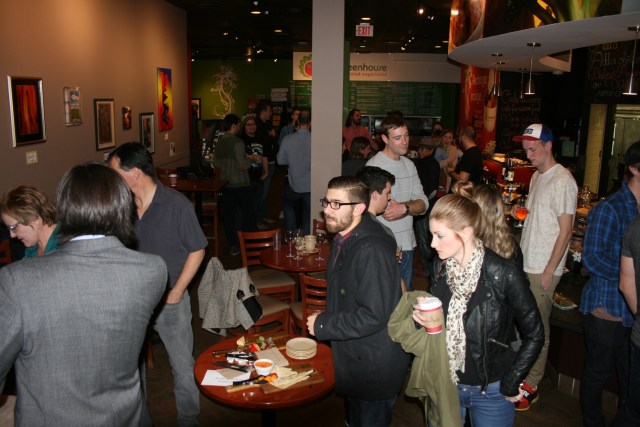
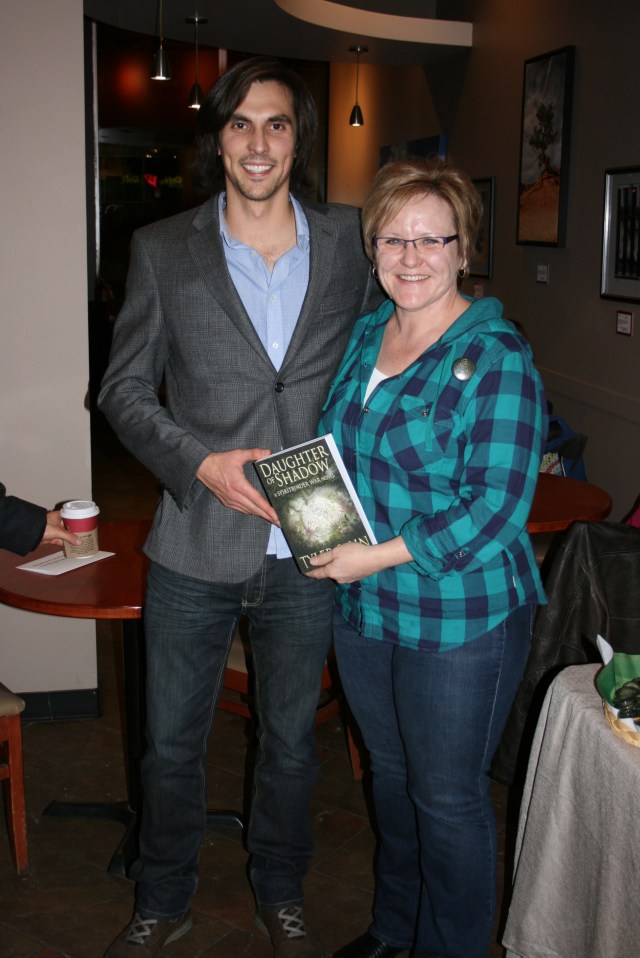
The book launch party for Daughter of Shadow was this past weekend and the support was amazing. The ebook has been available for a few weeks now but it was distinctly more satisfying (as a writer) to hold the book in my own hands. After countless hours staring into a computer screen while writing, dozens of edits, and a few bouts with formatting I finally had a finished product. A very surreal moment.

IMG_4690

The cover art turned out great; I’ve been quite impressed with Createspace. The entire order for the party sold out, which is a good problem to have. Signing copies was fun, a novelty that I doubt will get old anytime soon.

IMG_4683

I created a story but a story isn’t much without someone to share it with. Many thanks to everyone who attended the event and to all those who were unable to attend but still made the effort to contact me.

IMG_4691

Why Fantasy?

f3b75e48d1f35612dbc6aede6c421e68

At first glance fantasy seems like a ridiculous genre to read, let alone write, yet it has never been more popular than right now. Big books, modern day tomes, filled with swords, mythical beasts, magic, and outrageous adventures have became mainstream. People eat it up—old rehashed stories and modern innovations alike. Why?

I think this phenomenon stems from the ability of a fantasy novel to transport the reader into an exciting, foreign world controlled by the same, but accentuated, rules that govern the world we inhabit. At some point in our lives we all have epic fantasies and such fantasies appear as commonplace in a fantasy novel. The desire to become better than we are through diligent training, to rise to (and overcome) all challenges, to selflessly make the personal sacrifice when required, to shape the world with our own unique power. To be a hero.

I’m referring to an archetypal hero. The champion, the ultimate victor, an individual saturated with glory. In the stories these heroes come to believe, trust—no it’s even more than that—they know, deep down in their bones, where the spirit may or may not reside, that there is something other than themselves. That this something needs their aid. All well and good for an ancient musclebound Greek blessed by the gods, but what about the rest of us?

In many fantasy stories this schism of good and bad is clearly developed—light vs. dark, life vs. destruction, order vs. chaos, love vs. hate. This dichotomy works well within the confines of book covers but has difficulty spilling over into the day-to-day reality of our lives.

People are complicated, we’re bundles of contradictions. Rarely does a wise wizard appear to tell one that he/she is The Chosen One, and if you happen to find yourself in this situation DO NOT GIVE OUT YOUR CREDIT CARD INFO, because that elderly bearded gent is likely playing you for a sucker. And yet, wouldn’t it be easier with this magical system? To run off on a quest and triumph over the baddies—but in our world who are the baddies? We’re all just humans after all.

I’ve yet to encounter a rabid horde of trolls (late night scurrying to pizza shops after the bars close notwithstanding) and I’ve never faced the wrath of a Dark Lord hellbent on subjugation (personal debt is much subtler). So, if you were Señor or Señorita Chosen One, who would you do battle with, conquer, slay? What quest is worth the ultimate dedication?

Your answer is yours and yours alone, a completely subjective decision influenced by your own beliefs, age, societal affiliations, and motivations. Not right, not wrong, just yours. This is why I believe fantasy is a useful tool, because it allows for self-reflection by plunging the reader into a mirror-image of our world populated by characters battling with universal dilemmas. The large scope of fantasy is an attempted portrayal of an all-inclusive (not the kind with tropical drinks) struggle faced by individuals. One problem at a time. Page by page. The basic is expanded in order to be accessible, which is then interpreted through subjective experience. On some level the reader questions, “what would I do?” and this leads to the more important question of, “what do I believe?”

In a world without trolls and dragons (all we have are camera shy Sasquatch) where does one make a stand? What cause does one champion? There is no black and white answer, only a muddied grey full of choices. Choices that you must make for yourself.

Some people choose to make as few choices as possible and that’s fine I suppose, a kind of net-zero, not influencing positively or negatively, but I think that readers of fantasy are different. They’re dreamers. Hope filled idealists. Passionate explorers. Seekers of a quest. Not to burst any bubbles, but you’re already on a quest whether you realize it or not. A choose your own adventure where you can’t keep your finger on the page and read ahead to see if you like the outcome. No going back, no wizards or talking animals (besides a few species of canny birds). Only people.

We’re all we have. And as individuals, families, cultures, and societies we’re stranger, better, worse, more beautiful, uglier, weaker, and more powerful than anything imagined in fantasies.

Stories have the capacity to deeply affect us and from an early age I connected with the themes in fantasy stories. But that’s my subjective experience. Read a fantasy novel, put yourself into the story, allow the story to sink into you, and decide for yourself.